Perhaps you don’t ski—or no longer do—but you love hiking and dream of discovering the hidden side of the mountains in winter, yet you’d prefer not to venture out alone?
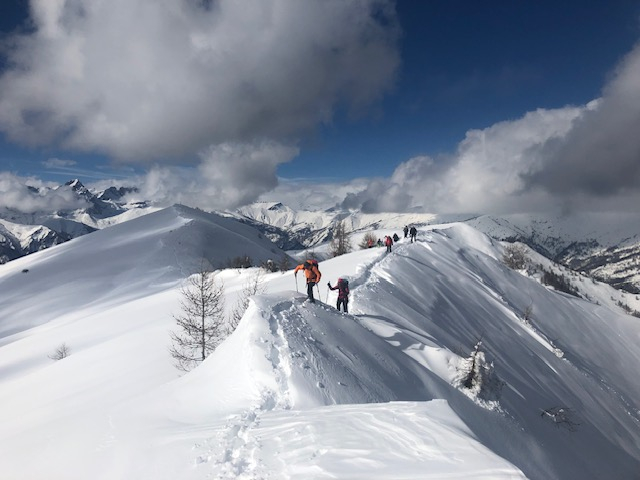
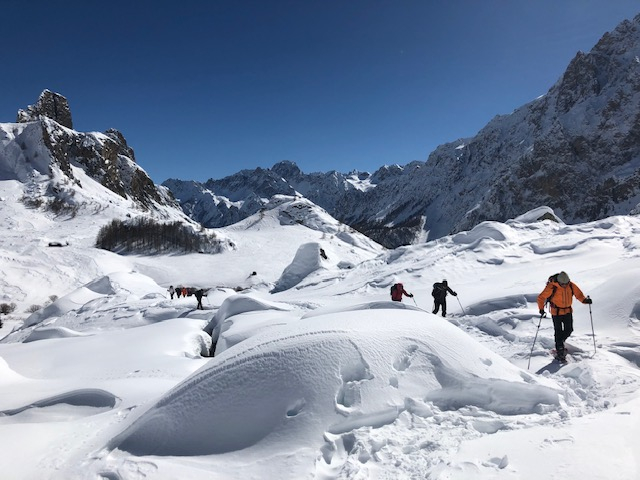
The Queyras is a pristine, wild, and authentic mountain range, offering an ideal playground for snowshoeing at any skill level.
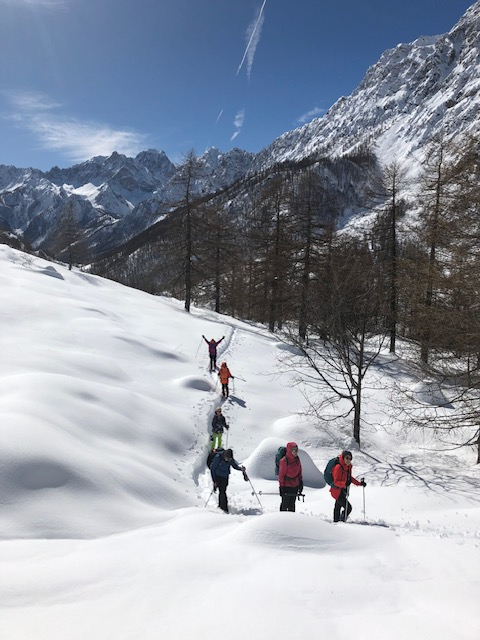
From larch forests to frozen lakes, and from accessible summits to abandoned summer mountain hamlets, we will set out to explore the hidden gems of this massif.
Come and discover these wonders accompanied by a state-certified mountain guide who has a deep love for this region. Leave your own tracks in the snow, listen to the crisp crunch beneath your feet, and zigzag your way to the summit—leaving a fleeting signature of our passage—before heading back down with long, bounding strides, cushioned by the soft, white blanket of snow.
By spending a day deep in the mountains, far from the ski lifts, we may even encounter high-altitude wildlife.
While catching a glimpse of wild animals is a true gift, we will remain discreet to ensure we don’t disturb these creatures, who are particularly vulnerable at this time of year.
Ultimately, this is also an opportunity—through the rhythm of our footsteps and our breathing—to embrace the physical effort, the shared experience, and the camaraderie that these mountain excursions offer. It is a simple, timeless moment where only the present matters—a peaceful interlude away from the sometimes hectic pace of daily life.